The First Gentleman’s Monthly Speaker Series Presents
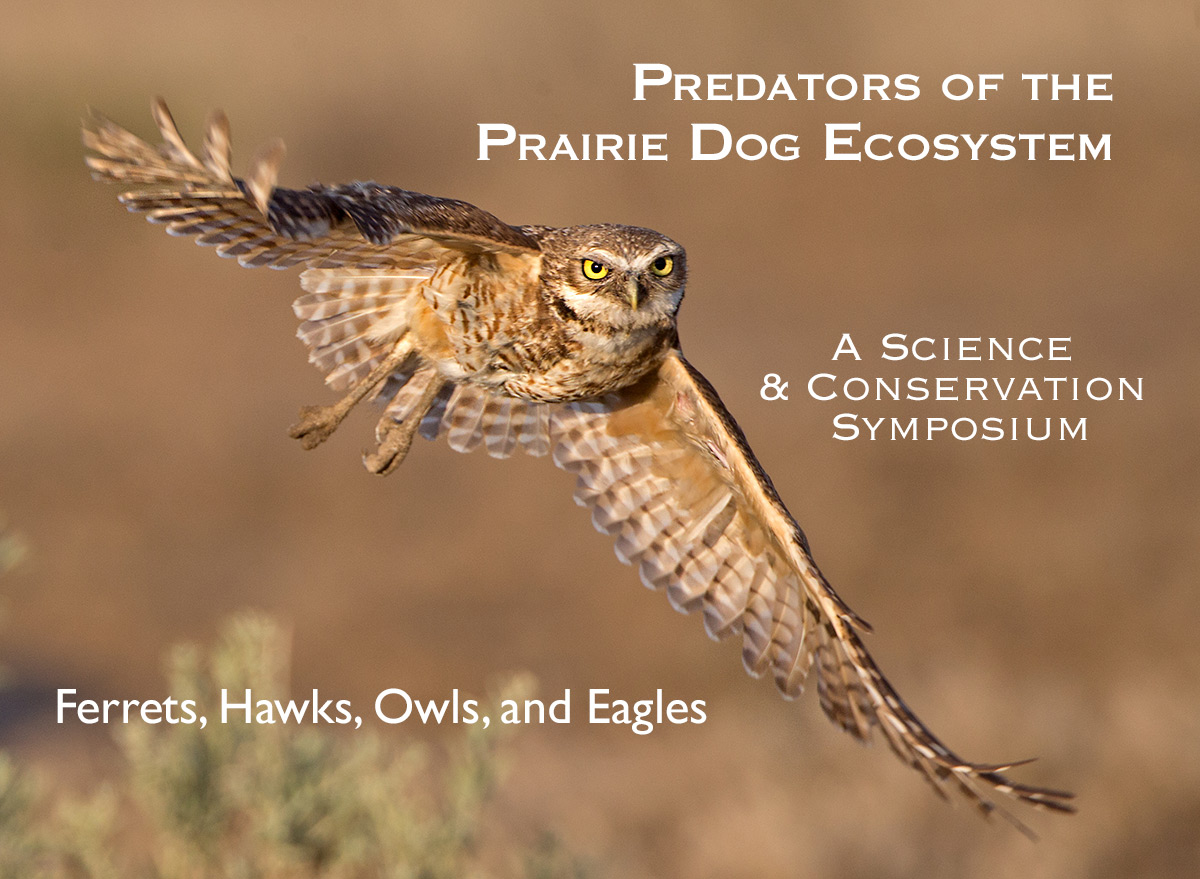
A Science & Conservation Symposium in two parts examining the ecological relationships
that connect prairie systems to raptors, burrowing mammals, and breeding and wintering eagles.
Colorado’s grasslands support an interconnected web of life — from prairie dogs and ground squirrels to ferruginous hawks, burrowing owls, black-footed ferrets, and breeding and wintering eagles. Research shows that grassland raptors depend on burrowing mammals and the broader prey base that prairie ecosystems sustain — and when those foundations decline, the effects ripple upward.
This symposium will be presented in two parts (March 31, 2026 and April 14, 2026) and explores the science behind these connections and what they mean for the future of Colorado’s non-game wildlife. Join us for a focused discussion on how strengthening our commitment to grassland conservation can sustain the species that define the West.
In his role as First Gentleman of Colorado, Marlon Reis is a champion for the natural world, promoting awareness of the interconnections between people, animals, and the environment. He is passionate about animal protection and raising public awareness of the ways in which climate change and biodiversity loss are interrelated.
Symposium Format
This 2-part symposium explored the science behind these connections and what they mean for the future of Colorado’s non-game wildlife. For those registered to attend in person, a focused discussion was held on how strengthening our commitment to grassland conservation can sustain the species that define the West.
Session 1 was held March 31, 2026; Session 2 was held April 14, 2026. Both sessions were held at the Colorado’s Governor’s Mansion. A live stream was also available on Colorado’s First Gentleman Marlon Reis’ Facebook Page for those not able to attend in person.
Summary of Session 1
The March 31 session of the Governor’s First Gentleman’s Speaker Series on Predators of the Prairie Dog Ecosystem was very well attended, with a full room and strong engagement throughout.
Rich Reading opened with an overview of prairie dogs as keystone ecosystem engineers, emphasizing their foundational role in sustaining grassland biodiversity. Dean Biggins followed with a compelling update on black-footed ferret recovery, highlighting both the progress made and the continued challenges in maintaining viable populations. Sarah Albright then connected science to on-the-ground conservation through her work on burrowing owls, illustrating how research directly informs stewardship in Colorado’s shortgrass prairie.
Together, the presentations underscored a central theme: grassland systems function as tightly interconnected networks, where the condition of prey species and habitat directly shapes outcomes for raptors and other predators. The session set a strong foundation for the second symposium on April 14, continuing the discussion on how science can guide effective conservation of Colorado’s non-game wildlife.
Summary of Session 2
Session 2 explored the science behind these connections and what they mean for the future of Colorado’s non-game wildlife.
The presentations on April 14 were were attended by a full house, and talks focused on Ferruginous Hawks, Bald Eagles, and the Prairie System that sustains them.
Speakers were Rich Reading, Jim Watson, and Dana Bove.
Questions and answers at the end were lively and information, but were not recoded due to camera issues. Also due to recording Issues, Dana Bove’s presentation was re-recorded after the the symposium and inserted into the footage.
The Presenters

Richard Reading
Richard Reading, Ph.D. is the Vice President of Science and Conservation at Butterfly Pavilion. He serves as an Affiliate Faculty with the Department of Agricultural Biology at Colorado State University; and as Chair of the Colorado Parks and Wildlife Commission. Rich is serving as the chair of this symposium.
Dr. Reading received a Ph.D. and three Master’s degrees from Yale University in Wildlife Ecology and Human Dimensions of Wildlife and an Honorary Doctorate from the National Education University of Mongolia. In 2020, Rich was honored to receive the Order of the Polar Star, the highest honor from the Mongolian National Government for expatriates, for contributions to conservation.
He has conducted or overseen projects in dozens of countries, working primarily on grassland and arid ecosystems on six continents, with a focus on the Great Plains of N. America, the steppes and deserts of Mongolia, the savannahs and deserts of Botswana, and the Altiplano of Peru. His work focuses on developing pragmatic, effective, and interdisciplinary approaches to the conservation of wildlife and protected areas through research, capacity development, and working with local people and governments.
Dr. Reading serves on the boards of directors or advisors for several non-profit organizations in the U.S. and overseas; serves as an associate editor for 4 scientific journals; has published over 245 scientific papers and book chapters; written dozens of popular articles; and written or edited 10 books.
Topic of Presentation: Prairie Dogs: Crucial Ecosystem Engineers
Dean E. Biggins, Research Wildlife Biologist (U.S. Geological Survey, retired)
Dr. Biggins’ general interest is in grassland ecology. Varied themes include aspects of behavioral ecology, predator-prey relationships, ecology of wildlife diseases. Most investigations were motivated by their application to conservation and recovery of federally listed species.
Dean Biggins received a Ph.D. in Zoology from Colorado State University in 2000. Prior to that, he earned a Master’s in Wildlife Biology at the University of Montana, and a B.S. from California State Polytechnic University – also in Wildlife Biology.
His career spans decades of research as a Wildlife Biologist, most recently with the U. S. Geological Survey (USGS) in Fort Collins, CO. Prior work was with the National Science Board (NSB) in Fort Collins, and the U.S. Fish & Wildlife Service (USFWS) in Fort Collins, CO and Sheridan, WY.
Dr. Biggins began working on black-footed ferret conservation in 1981 when the species was “rediscovered” near Meeteetse, Wyoming. After diseases had decimated most of the Meeteetse population of ferrets during 1985, he and his field team captured 12 of the 18 ferrets that formed the present captive breeding program. In 2012, he was honored by the American Society of Mammalogists with their Aldo Leopold Conservation Award for his long-standing dedication to ferret recovery. Although he officially retired from federal service in 2019, he continues to be active in conservation and research. His present work is focused primarily on ecology and management of plague, the introduced and emerging bacterial disease that is now recognized as the primary biological threat to ferret recovery.
Topic of Presentation: An Overview of the Biology of Black-footed Ferrets and a Brief History of Their Conservation
The talk will begin with an overview of the biology of black-footed ferrets and a brief history of their conservation. Examples of key questions will be emphasized, with descriptions of research activities designed to answer those questions. Several studies will be summarized that demonstrated the pervasive influence of plague on the grassland ecosystems that support black-footed ferrets and other species, ending with a summary of tools that were developed to manage plague.

Sarah Albright
Sarah Albright, Grassland Program Manager, Bird Conservancy of the Rockies.
Sarah is Grasslands Program Manager with Bird Conservancy of the Rockies where she works to improve grassland conservation and management in Colorado, Wyoming, and South Dakota. Sarah grew up in California where she completed her B.S. in ecology and evolutionary biology at UC Santa Cruz. Sarah has found a deep passion for stewardship and management by working in a variety of systems including coastal scrublands, pinyon-juniper woodlands, shortgrass prairie, and the alpine. Sarah completed her M.S. in ecology at Colorado State University, conducting a population assessment of burrowing owls nesting in eastern Colorado. Sarah is passionate about the conscious stewardship of working lands and looks forward to connecting with the people and communities that call the grasslands and other ecosystems home. In her free time, she can be found doing a variety of outdoor activities including gardening, swimming, climbing, and enjoying the rugged stillness of nature.
Topic of Presentation: Science to Stewardship: Burrowing Owl Conservation in Colorado’s Shortgrass Prairie
Eastern Colorado is dominated by expansive tracts of grass, flowers, and shrubs that make up the shortgrass prairie. This unique ecosystem is home to a diverse suite of wildlife including insects, pronghorn, badgers, prairie dogs, and birds. Sarah Albright, Bird Conservancy’s Grassland Program Manager, will take a deep dive into shortgrass prairie ecology and the threats it faces through the lens of a charismatic species-the burrowing owl. Sarah will give updates on recent burrowing owl research and discuss current conservation efforts. In addition, she will discuss the role of working lands and how they are important components of shortgrass prairie conservation.

Dana Bove
Dana Bove is the founder and principal investigator of Front Range Eagle Studies (FRNBES), a long-term field research program documenting raptor nesting ecology across northern Colorado.
His work focuses on territory-scale dynamics, upland eagle systems, post-fledging dependence, and the ecological role of prairie dog landscapes in supporting grassland raptors. Through multi-year field research and behavioral data analysis, he examines how prey availability and habitat structure influence nesting stability in human-altered landscapes.
Topic of Presentation: Bald Eagles Along Colorado’s Northern Front Range
Bald eagles along Colorado’s northern Front Range occupy an unusual prairie-edge system. Unlike river-based, fish-dominated regions, many territories operate in semi-arid upland landscapes with limited open water and highly variable prey. Prairie dog complexes and aging cottonwoods function as critical ecological infrastructure, supporting both foraging and nesting structure. Recruitment of suitable nest trees is limited, and once lost, replacement options are scarce.
Field research across multiple Front Range territories shows how nesting stability depends on intact prey systems and available space. In the Stearns territory, disturbance near core perches led to temporary relocation into adjacent prairie dog habitat. When that habitat was later converted to development, the adaptive space was permanently removed, demonstrating how flexibility is constrained by habitat availability.
This presentation examines how prey systems, habitat structure, and life-history timing intersect in upland eagle territories, and what these dynamics mean for sustaining raptor populations in rapidly developing landscapes.
Jim Watson
Jim Watson is a Wildlife Research Scientist with the Washington Department of Fish and Wildlife (WDFW) and lead researcher for statewide raptor studies.
For more than five decades, his work has focused on raptor population dynamics, migration ecology, and the management of raptors in human-altered landscapes. His interest in ferruginous hawks began in Colorado in the early 1970s.
Topic of Presentation: The Ferruginous Hawk
This presentation will examine the ferruginous hawk–burrowing mammal relationship, summarize findings from long-term research, and consider implications for prairie ecosystem management in Colorado.
The Ferruginous Hawk (Buteo regalis) is a grassland specialist whose annual ecology is closely tied to burrowing mammals, including ground squirrels and prairie dogs. Across much of its range, nesting density and reproductive success are strongly influenced by the availability of these prey species.
Research in Washington State has documented how the decline of ground squirrels altered nesting distribution and reduced reproductive output in ferruginous hawks, illustrating the degree to which this raptor depends on fossorial mammal systems.
In Colorado, prairie dog dynamics raise similar concerns. Large portions of the Front Range serve as winter habitat for ferruginous hawks and other grassland raptors for up to six months each year. Changes in prairie dog abundance may therefore affect both breeding and migratory populations.